
Il nostro impatto, il nostro impengo
Our impact
in 2024
Il nostro impatto, il nostro impengo
Our impact
in 2024
in 2024
Our commitment to a sustainable future: the concrete actions that Renergia has undertaken during 2024 and the commitments towards the environment, society and the economy.
Download the Sustainability ReportThe journey
For Renergia, sustainability is not just an objective but a guiding value that shapes every decision and action we take. We believe in a growth model that combines innovation and responsibility, reducing the environmental impact of our operations, enhancing resource value, and promoting a more circular and regenerative economy.
With transparency and integrity at the heart of our governance, we are committed to pursuing a long-term path toward decarbonization, resource efficiency, and the creation of shared value for the environment, people, and the communities in which we operate.
This daily commitment inspires every choice we make and forms the foundation on which we build Renergia’s sustainable energy future.
With transparency and integrity at the heart of our governance, we are committed to pursuing a long-term path toward decarbonization, resource efficiency, and the creation of shared value for the environment, people, and the communities in which we operate.
This daily commitment inspires every choice we make and forms the foundation on which we build Renergia’s sustainable energy future.

Related SDGs
In our commitment to sustainability, we have adopted the United Nations Sustainable Development Goals (SDGs) as a guide to steer our strategies and actions.
The selection of the SDGs related to our material topics was a rigorous and participatory process, involving various stakeholders and taking into account the specificities of our sector and the areas of greatest impact of our company.
The selection of the SDGs related to our material topics was a rigorous and participatory process, involving various stakeholders and taking into account the specificities of our sector and the areas of greatest impact of our company.
7
Business-related SDGs
Our environmental commitment
Calculation of Scope 1, 2, and 3 emissions
We have quantified our direct and indirect emissions closely related to business activities (Scope 1 and 2) and the indirect emissions generated along the value chain (Scope 3). The calculation was carried out for Renergia S.p.A., Biomet Ambiente S.r.l., Biomet GNL S.r.l., and Agrimet S.r.l.
Scope 3
Scope 3 includes indirect greenhouse gas emissions generated upstream and downstream of the company’s direct activities. There are a total of 15 emission categories in Scope 3, but each company focuses on the most significant sources based on the sector in which it operates and the activities it undertakes.
To report our indirect emissions, we have considered the categories shown in the image, covering all four companies of the Group: Renergia S.p.A., Biomet Ambiente S.r.l., Biomet GNL S.r.l., and Agrimet S.r.l.
To report our indirect emissions, we have considered the categories shown in the image, covering all four companies of the Group: Renergia S.p.A., Biomet Ambiente S.r.l., Biomet GNL S.r.l., and Agrimet S.r.l.
7
Scope 3 Emission Categories
Circular economy and waste management
Renergia promotes the responsible management of resources as a key commitment to reducing environmental impact.
The Group encourages the recovery and reuse of materials, ensuring proper separation and traceability of waste.
Organic residues are transformed into certified agricultural compost, closing the natural cycle and returning value to the soil.
Through this approach, Renergia integrates efficiency, innovation, and circularity into its daily operations, contributing to a more sustainable and regenerative economy.
The Group encourages the recovery and reuse of materials, ensuring proper separation and traceability of waste.
Organic residues are transformed into certified agricultural compost, closing the natural cycle and returning value to the soil.
Through this approach, Renergia integrates efficiency, innovation, and circularity into its daily operations, contributing to a more sustainable and regenerative economy.
Human capital development
Renergia fosters a culture of learning and professional growth, aware that developing people’s skills is essential to innovation and long-term success. The Group promotes training programs that strengthen both technical expertise and managerial capabilities, preparing employees to operate effectively in complex industrial and regulatory contexts.
Continuous improvement is encouraged through specialized courses in plant management, environmental regulation, and operational efficiency, alongside initiatives aimed at enhancing soft skills and leadership potential. By progressively structuring systems for performance evaluation and career development, Renergia supports internal mobility, talent retention, and continuous growth, ensuring that every individual’s development contributes to the Group’s broader sustainability and innovation goals.
Continuous improvement is encouraged through specialized courses in plant management, environmental regulation, and operational efficiency, alongside initiatives aimed at enhancing soft skills and leadership potential. By progressively structuring systems for performance evaluation and career development, Renergia supports internal mobility, talent retention, and continuous growth, ensuring that every individual’s development contributes to the Group’s broader sustainability and innovation goals.
Health and safety at work
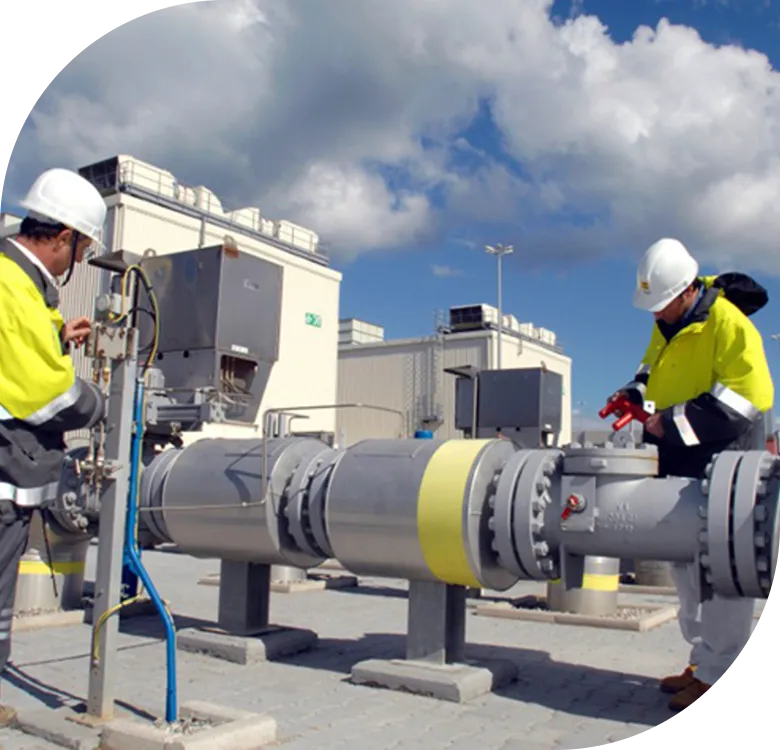
Renergia places health and safety at work among its highest priorities, integrating prevention and protection into its corporate culture. The Group has implemented uniform management systems across all companies, supported by continuous training, medical surveillance, and constant oversight by the Health and Safety Officers (RSPP).
Each workplace operates according to risk assessment and prevention procedures, ensuring full regulatory compliance and the safe execution of all activities.
Employees are actively involved in identifying and reporting potential hazards through dedicated communication channels and structured procedures that promote a culture of shared responsibility and prevention. The Group’s commitment is reinforced by internal audits, targeted training, and adherence to the ISO 45001 certification, which ensures continuous improvement in occupational health and safety performance.
Each workplace operates according to risk assessment and prevention procedures, ensuring full regulatory compliance and the safe execution of all activities.
Employees are actively involved in identifying and reporting potential hazards through dedicated communication channels and structured procedures that promote a culture of shared responsibility and prevention. The Group’s commitment is reinforced by internal audits, targeted training, and adherence to the ISO 45001 certification, which ensures continuous improvement in occupational health and safety performance.
Employee well-being
Renergia places employee well-being at the center of its culture, promoting a fair and inclusive work environment. The Group has introduced a comprehensive welfare system that supports work-life balance through flexible measures such as smart working, electronic meal vouchers, and personalized benefits.
Health coverage is extended to all employees and their families, including medical services. These initiatives are applied consistently across all Group companies, ensuring equitable access and uniform treatment, while reaffirming Renergia’s commitment to fairness, gender equity, and the well-being of its people.
Health coverage is extended to all employees and their families, including medical services. These initiatives are applied consistently across all Group companies, ensuring equitable access and uniform treatment, while reaffirming Renergia’s commitment to fairness, gender equity, and the well-being of its people.

Our commitment to governance
Business ethics and integrity
Renergia has strengthened its governance model based on ethics, transparency and responsibility, adopting structured tools to prevent misconduct, safeguard decision-making integrity, and reinforce stakeholder trust. All Group companies apply consistent policies and integrated control systems aligned with the highest regulatory and ethical standards.
The Group has updated its Organizational, Management and Control Model in compliance with Legislative Decree 231, supported by a comprehensive Code of Ethics that defines principles of conduct focused on anti-corruption, conflict of interest management, and regulatory compliance. An independent supervisory body ensures constant monitoring, while training and internal communication have strengthened awareness across the entire organization.
The Group has updated its Organizational, Management and Control Model in compliance with Legislative Decree 231, supported by a comprehensive Code of Ethics that defines principles of conduct focused on anti-corruption, conflict of interest management, and regulatory compliance. An independent supervisory body ensures constant monitoring, while training and internal communication have strengthened awareness across the entire organization.
Powered by
